

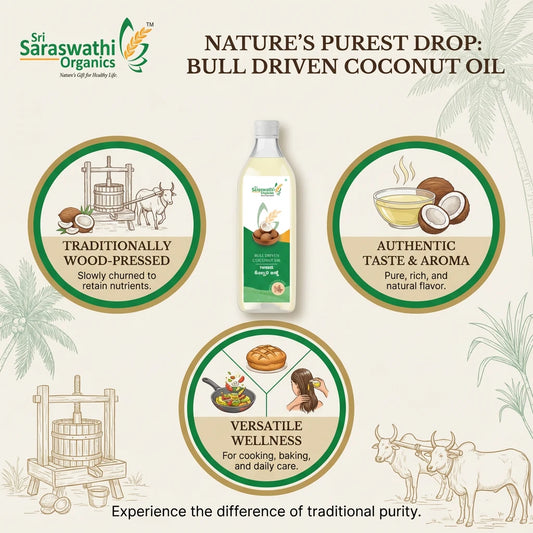
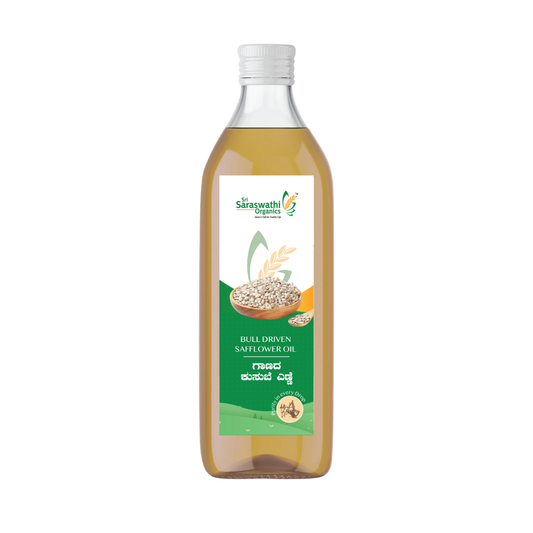

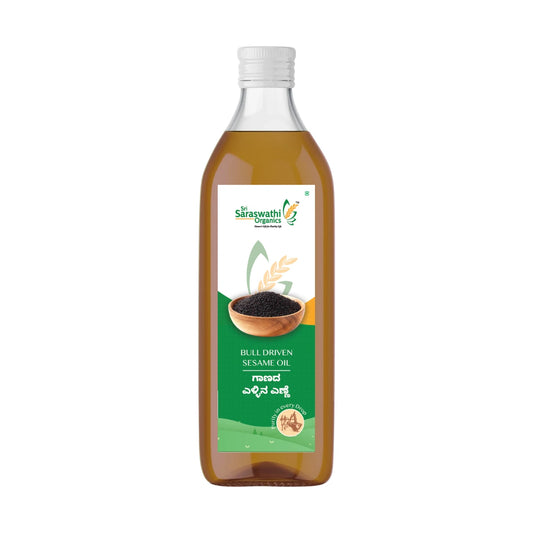
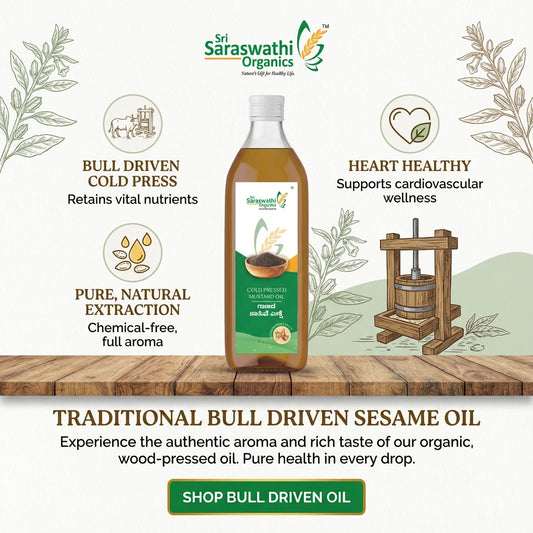
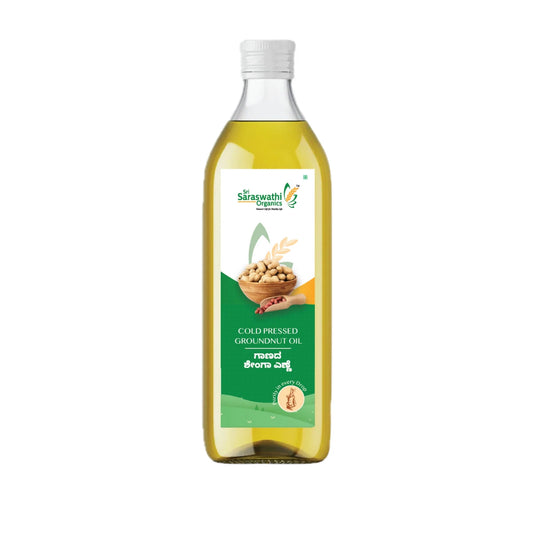

Bull-driven wood-pressed oil is a type of cold-pressed oil. Cold-pressed oil is generally extracted using a mechanical machine or expeller at low temperatures, while bull-driven wood-pressed oil is extracted using a traditional wooden ghani powered by bullocks at a much slower 2–3 RPM.
In simple terms: All bull-driven wood-pressed oil is cold-pressed, but not all cold-pressed oil is wood-pressed.

Cold Pressed Groundnut Oil: Benefits, Nutrition & Uses

⏱️ 7 min read
Groundnut oil, also known as peanut oil, has been a familiar cooking oil in Indian kitchens for generations. Made from groundnuts (peanuts), it has a naturally mild, nutty flavour and works well across a wide range of everyday dishes.
But not all groundnut oil is made in the same way. The method used to extract oil from the groundnut can influence its flavour, aroma, colour and the natural compounds it retains. This is why you may come across terms like refined groundnut oil, cold pressed groundnut oil and wood pressed groundnut oil when choosing an oil for your kitchen. Among these, cold pressed and traditional wood pressed methods offer a way to obtain groundnut oil without the intensive refining processes used for refined oils.
We’ve put together this guide to show you how to spot the best quality oil, why extraction methods change everything, and how this traditional oil can support a healthier lifestyle.
🌿 Did You Know?
Peanuts aren't actually nuts! 🥜 They are legumes, just like beans, peas and lentils, and they grow underground inside pods.
What Is Groundnut Oil?
At its simplest, groundnut oil is the oil extracted from groundnuts, popularly known as peanuts. Because peanuts are naturally high in healthy fats, they have been a staple source of oil for generations, prized for their high smoke point and a characteristic nutty aroma that elevates everything from daily stir-fries to deep-fried delicacies.
However, in today’s market, you will often see it labeled under various names depending on where you shop:
- Peanut Oil / Arachis Oil (Common global and scientific names)
- Mungphali Ka Tel (Hindi) / Kadalai Ennai (Tamil) / Shengada Enne (Kannada)
- Cold-Pressed / Wood-Pressed / Bull-Driven / Marachekku / Lakdi Ghani Groundnut Oil
While these names may refer to oil made from the same basic ingredient, the extraction and processing method can be very different.
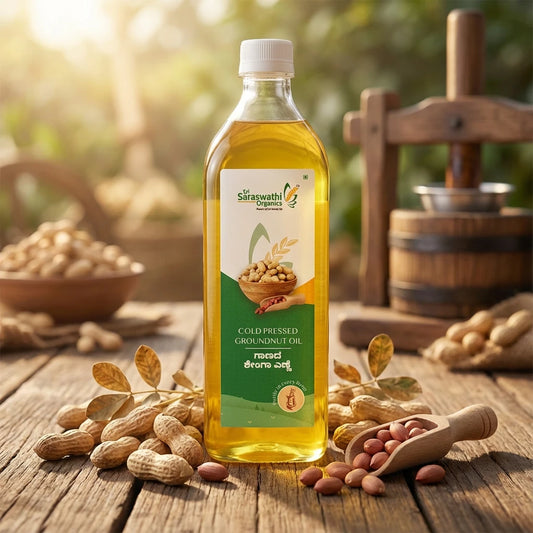
Pure Cold Pressed Groundnut Oil
Zero Trans Fat • Zero Cholesterol
Pure, unrefined cold-pressed groundnut oil for your everyday cooking.
What Makes Cold Pressed Groundnut Oil Different?
Cold pressed groundnut oil is produced by mechanically pressing groundnuts without using chemical solvents for extraction. The groundnuts are cleaned and prepared before being crushed in an oil expeller. The oil is then separated from the groundnut cake and filtered to remove suspended particles. This allows the oil to retain more of the natural characteristics of the groundnut, including its characteristic aroma, flavour & nutrients.
Why does the extraction method matter?
High-temperature processing and refining can alter the natural characteristics of an oil. Cold pressing takes a gentler approach, using mechanical pressure rather than chemical extraction.
This is one reason many people looking for a more traditional cooking oil choose cold pressed peanut oil over heavily processed refined groundnut oil.
🌿 The Difference
While industrial refining involves high heat and extensive processing that can reduce naturally occurring compounds, cold-pressed oils are extracted mechanically at low temperatures, typically below 40°C. The slow rotation of a traditional wooden Ghani takes this a step further, helping minimise friction and heat while retaining more of the groundnut's natural characteristics.
Groundnut Oil Nutrition: What Does It Contain?
Groundnut oil is primarily made up of fats, as you would expect from any edible cooking oil. Its nutritional profile includes different types of fatty acids, particularly monounsaturated and polyunsaturated fats, along with naturally occurring compounds such as tocopherols (forms of vitamin E).
- Heart-Healthy Fats: Rich in Monounsaturated (MUFA) and Polyunsaturated (PUFA) fats. These "good fats" help lower bad cholesterol and support heart health.
- Vitamin E & Tocopherols: Potent natural antioxidants that protect your cells from damage, boost immunity, and improve skin health.
- Resveratrol: A rare plant compound known for its antioxidant action and ability to lower oxidative stress.
- Natural Phytosterols: These plant sterols actively compete with cholesterol, helping to reduce its absorption in your body.
-`♡´- Health Tip
For healthier cooking, avoid repeatedly overheating or reusing cooking oil. As a general guideline, keep your total visible cooking oil intake to around 2–3 teaspoons per person per day, depending on your overall diet and individual needs.
Groundnut Oil Benefits
1. Heart-Friendly Unsaturated Fat Profile
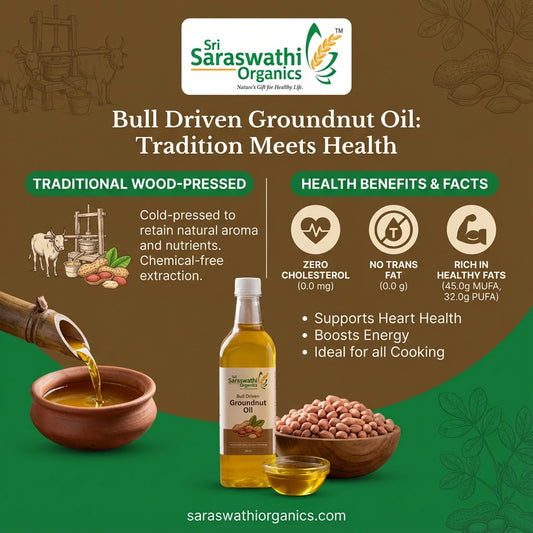
Groundnut oil contains a high proportion of unsaturated fats, including 45 g of monounsaturated fat (MUFA) and 32 g of polyunsaturated fat (PUFA) per 100 g, making it an excellent choice for maintaining healthy lipid profiles. Scientific studies suggest that replacing saturated fats with unsaturated fats like those found in peanut oil can help manage LDL (bad cholesterol) while supporting HDL (good cholesterol).
2. Suitable for Everyday Cooking
Groundnut oil is a versatile groundnut cooking oil that can be used for sautéing, tempering, shallow frying and deep frying. It has a relatively high smoke point (Unrefined groundnut oil has a smoke point ranging from 160°C to 200°C), making it suitable for cooking at moderately high temperatures.
3. Naturally Contains Vitamin E and Antioxidant Compounds
Groundnut oil naturally contains tocopherols, forms of vitamin E, which have antioxidant properties. Antioxidants help protect cells from oxidative stress caused by free radicals and also help protect the oil's fats from oxidation.
4. Zero Chemical Solvents (Hexane-free)
Industrial oil extraction often uses Hexane, a petroleum-derived solvent, to maximize yield. Cold-pressed extraction is a purely mechanical process. This ensures the final product is free from solvent residues and bleaching agents.
5. Rich Flavour and Satisfying Cooking Experience
Groundnut oil has a naturally nutty flavour and aroma, which can enhance the taste of everyday dishes. Its rich flavour makes it a satisfying choice for traditional Indian cooking, from tempering to frying.
Two Ways to Experience Pure Cold Pressed Groundnut Oil
At Sri Saraswathi Organics, we offer groundnut oil made using two different traditional approaches.
Machine Cold Pressed Groundnut Oil
Machine cold pressing uses a mechanical oil expeller to crush and press the groundnuts. Our machine operates at around 18 RPM, using a controlled mechanical process to extract the oil without chemical solvents. It offers the convenience of modern mechanical extraction while retaining the natural character of the groundnut.
Bull-Driven Wood Pressed Groundnut Oil
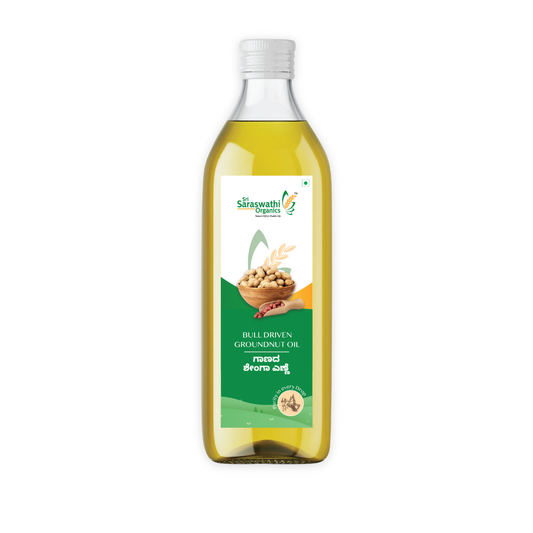
Bull-driven wood pressed groundnut oil takes traditional extraction a step further. The groundnuts are placed inside a traditional wooden ghani, also known as marachekku. Instead of an electric motor driving the pestle, the ghani is powered by a bull walking slowly around the traditional press.
The bull-driven ghani operates at around 2–3 RPM, significantly slower than our machine cold-pressing process. This slow movement allows the groundnuts to be crushed and pressed gently, with minimal friction and heat generation.
🐂 Why Choose Bull-Driven Wood-Pressed Oil?
Bull-driven wood-pressed groundnut oil is considered the pinnacle of nutritional purity. Because the wooden Ghani rotates at an ultra-slow pace (2–3 RPM), it prevents heat friction, keeping the oil's fragile antioxidants and heart-healthy fats fully intact. This traditional method ensures a 100% chemical-free oil that supports long-term wellness in a way refined oils cannot.
How to Choose the Best Cold-Pressed Groundnut Oil
Not all oils labeled "cold-pressed" are created equal. To ensure you are getting a nutrient-dense, chemical-free product, look for these four markers of quality:
💡 Pro Tip
Don't be afraid of a little cloudiness. Slight cloudiness is natural in cold-pressed oil. It can occur due to fine seed particles and naturally occurring compounds that remain after gentle filtration. Unlike highly refined oils, cold-pressed oils aren't processed extensively just to achieve a perfectly clear appearance.
-
Verify the Extraction Method: Choose cold-pressed oils over extensively refined oils, or opt for bull-driven wood-pressed (Lakdi Ghani) oil for the highest level of purity and traditional extraction.
-
Ensure it is Hexane-Free: Industrial oils use chemical solvents (like hexane) to increase yield. High-quality oil should be 100% mechanically pressed without any petroleum-derived chemicals.
-
Check for a Single Ingredient: The label should list only "Groundnuts." Avoid bottles containing "permitted antioxidants" (like TBHQ), anti-foaming agents, or preservatives.
Explore Related Products:
Frequently Asked Questions:
What is the difference between cold-pressed and bull-driven wood-pressed oil?
Why is wood-pressed oil more expensive than refined oil?
Can I use wood-pressed groundnut oil for daily cooking?


Offers and Updates
Get updates on our products, tips for healthy living, and special offers straight to your inbox.
