
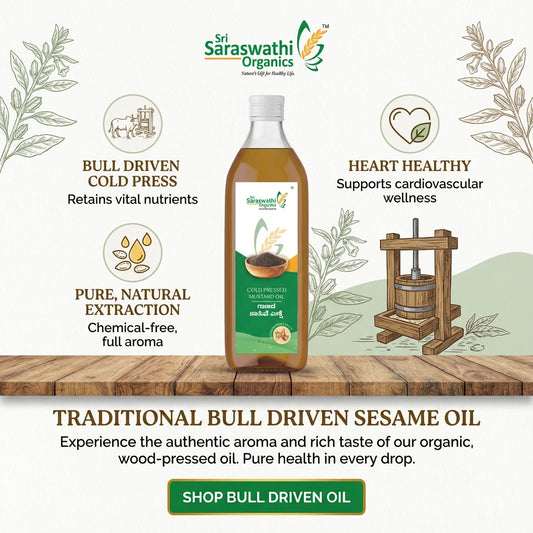
Both methods use traditional mechanical extraction without chemical refining. The key difference is the speed of extraction. Bull-driven extraction is a slow process, typically around 2–3 RPM, which helps minimise friction and heat during extraction. This gentle process helps preserve the oil's natural flavour, aroma, and nutrients.

What Is Bull-Driven Oil? How Is It Made?

⏱️ 6 min read
We spend so much time checking the labels on our food, yet the most important ingredient in our kitchen, oil, is often the most processed. Most modern oils are stripped of their nutrients by high-speed machines, heat and harsh chemicals. But what if you could choose an oil that never touched a chemical or saw high heat? That’s where Bull-Driven Oil comes in. It’s a return to purity for families who refuse to compromise on their health.
What Is Bull-Driven Oil?
Bull-driven wood pressed oil refers to oil extracted using a traditional wooden ghani or Marachekku that is operated by a bull. The bull walks around the ghani in a circular motion, turning the wooden mechanism connected to the pressing chamber.
As the mechanism rotates, the seeds inside the ghani are gradually crushed and pressed. The oil released during this process is collected and subsequently filtered and prepared for storage.
The term "bull-driven" describes the traditional method used to power the extraction process. It is the combination of the animal-powered mechanism, wooden ghani and gradual pressing process that distinguishes this traditional method of oil extraction.
Which Oils Can Be Extracted Using a Bull-Driven Ghani?
Traditional ghanas can be used to extract oil from a variety of suitable oilseeds, depending on the seed's characteristics and process used. Each seed has its own characteristics, which influence the aroma, colour, flavour and other properties of the resulting oil.
Discover the Saraswathi Organics Collection
While many are familiar with common oils, our bull-driven method allows us to offer a full range of traditional oils, each with its own "personality" and purpose in your kitchen:
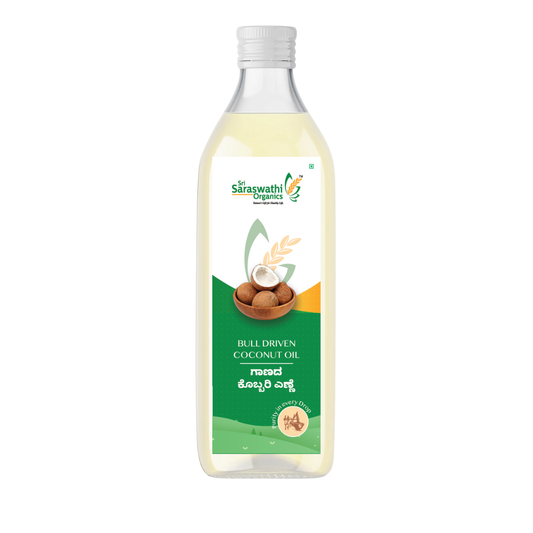
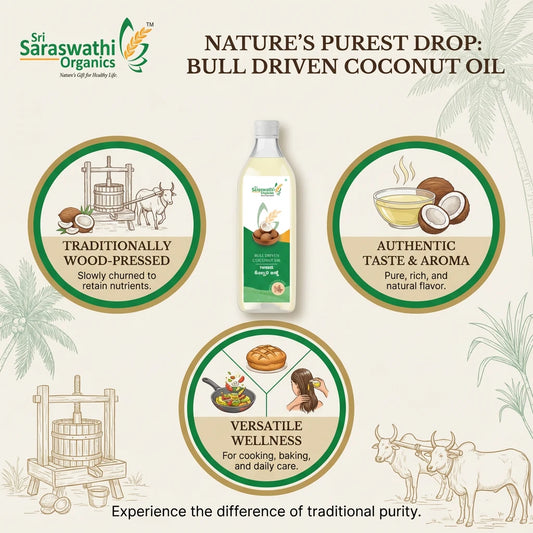
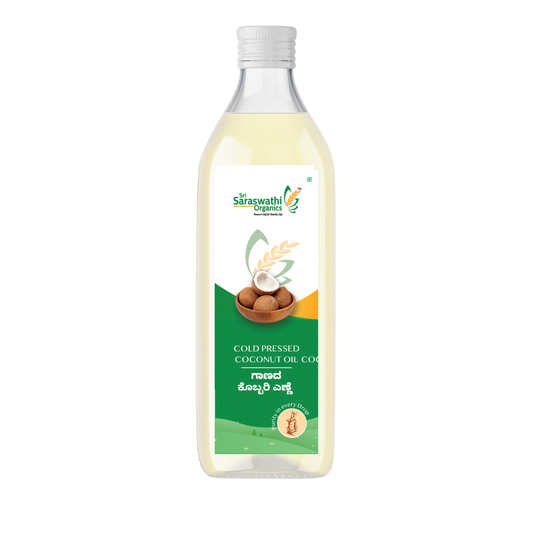
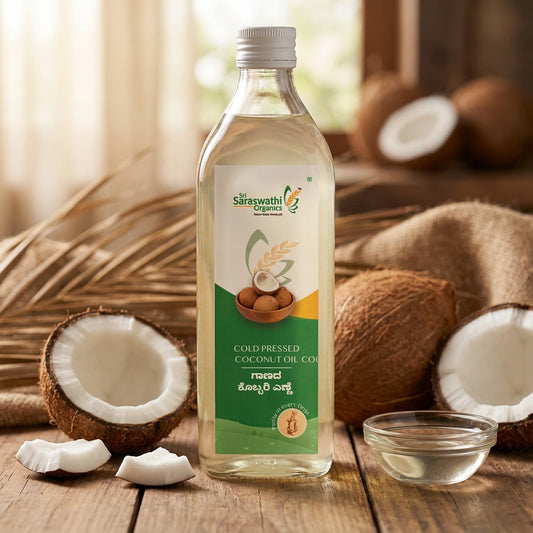
🥥 Bull Driven Coconut Oil
Traditionally extracted from fresh, sun-dried coconuts.
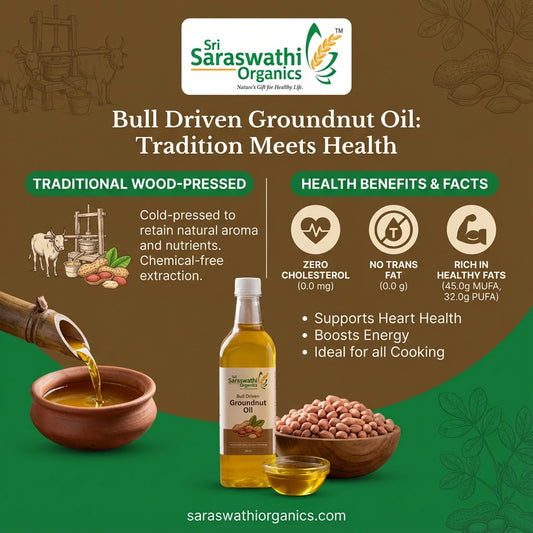
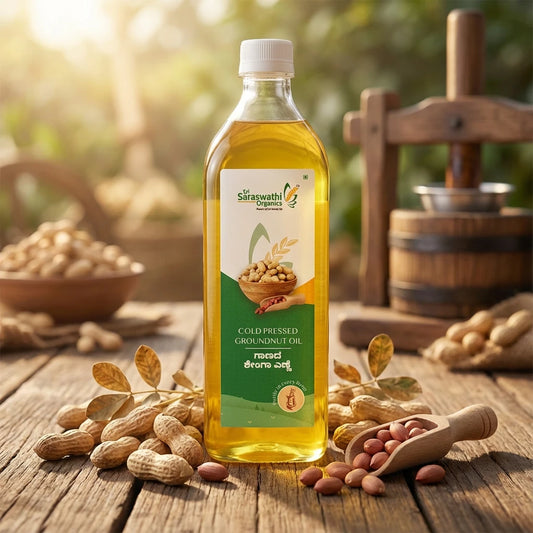
🥜 Bull Driven Groundnut Oil
Rich, nutty oil for everyday Indian cooking.
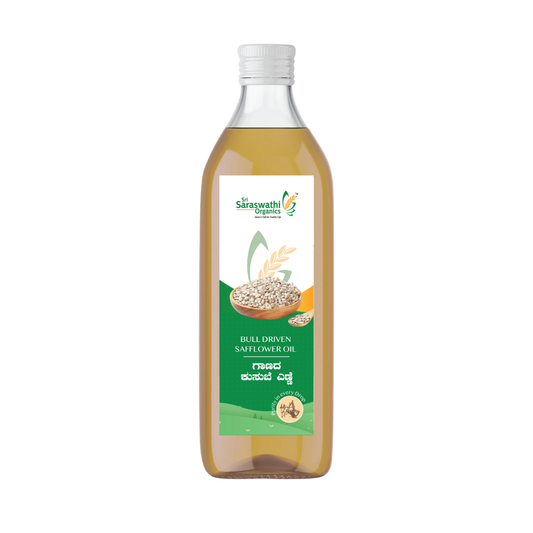
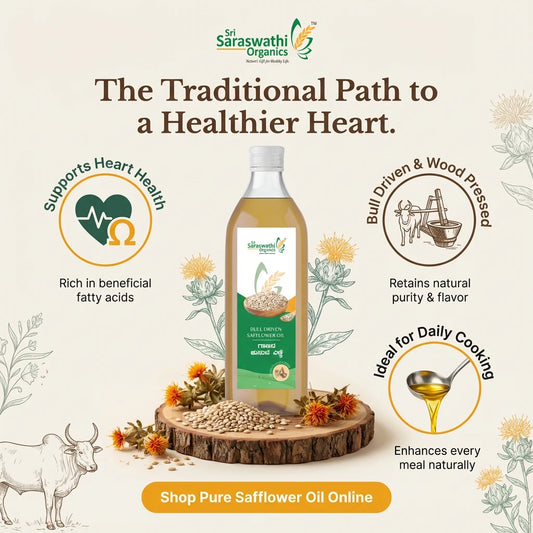
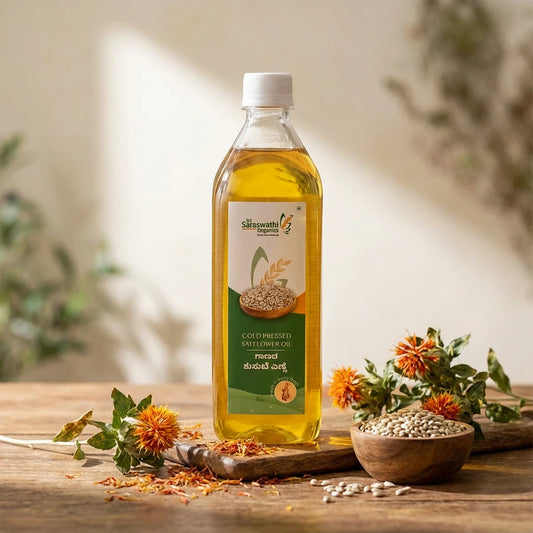
🏵️ Bull Driven Safflower Oil
Light-tasting oil for everyday cooking.
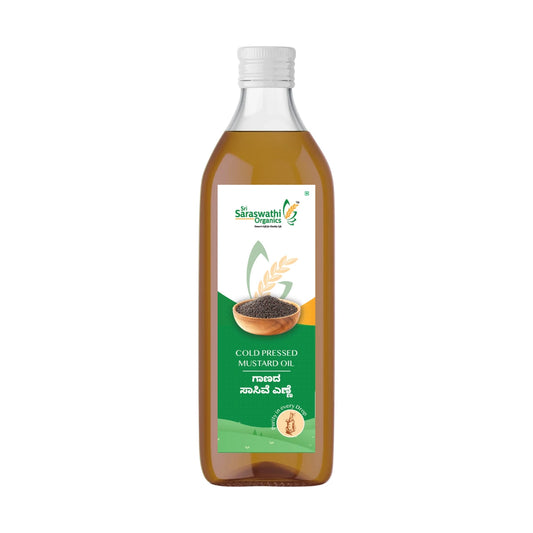
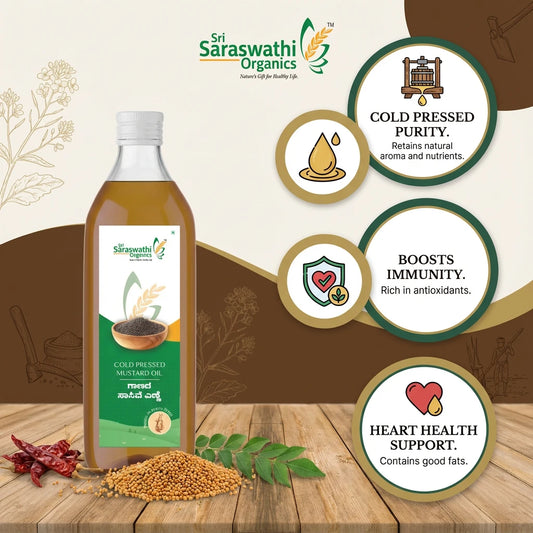
🌱 Bull Driven Mustard Oil
Bold, aromatic oil for traditional recipes.
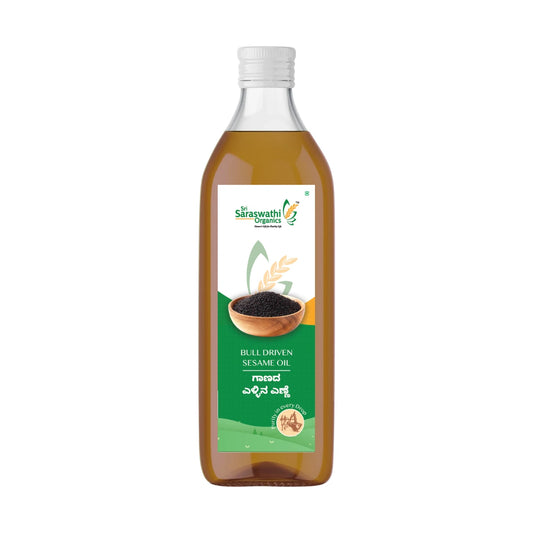
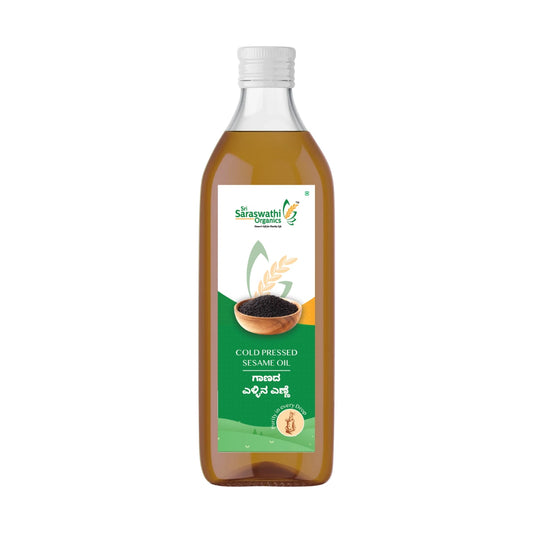
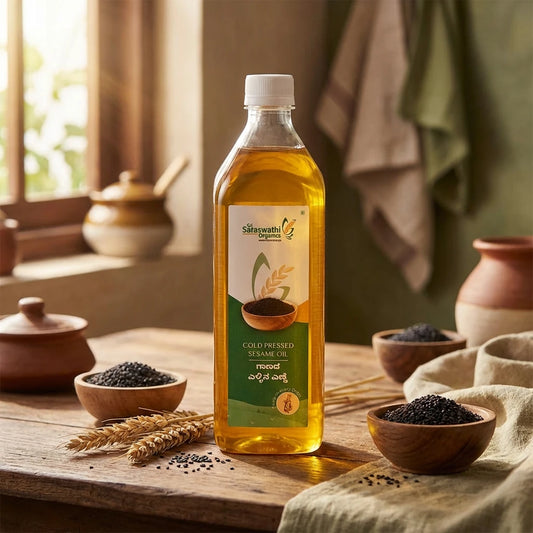
𓇢 Bull Driven Sesame Oil
Rich, earthy oil for traditional cooking.
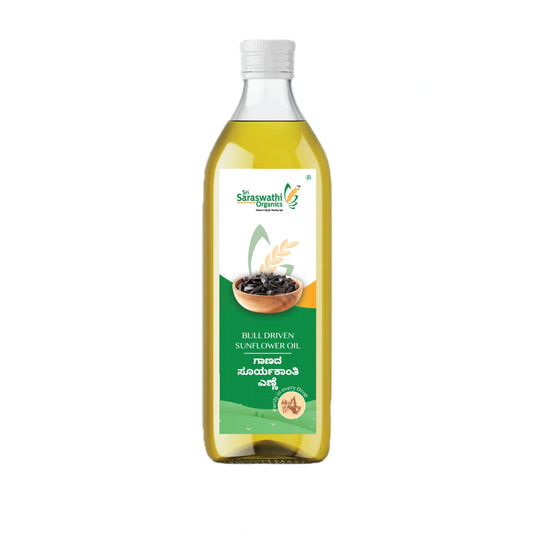
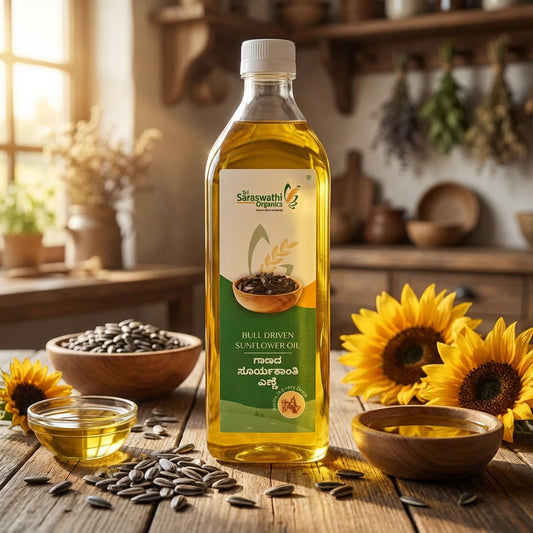
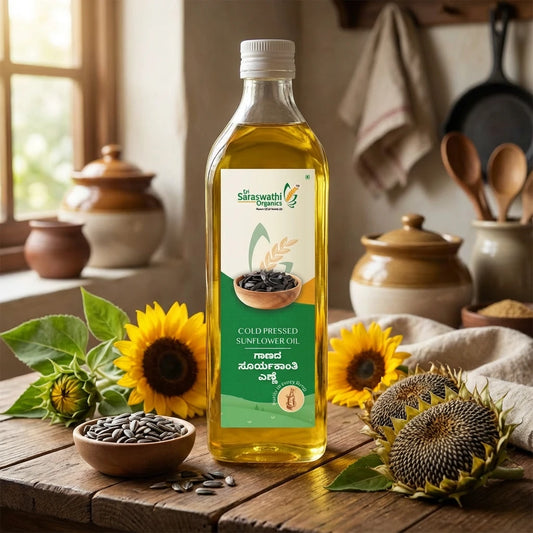
🌻 Bull Driven Sunflower Oil
Versatile oil for everyday cooking.
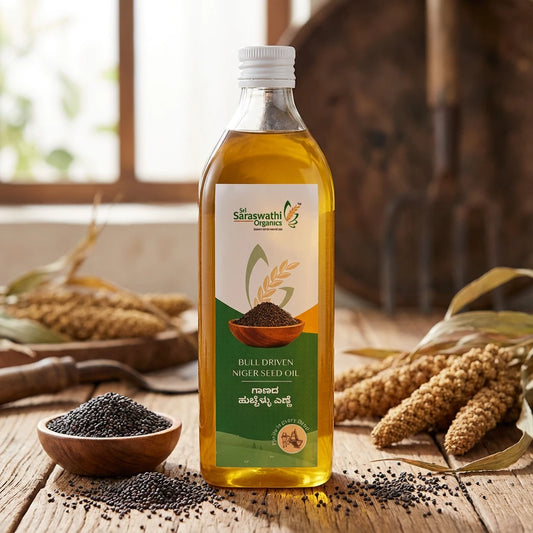
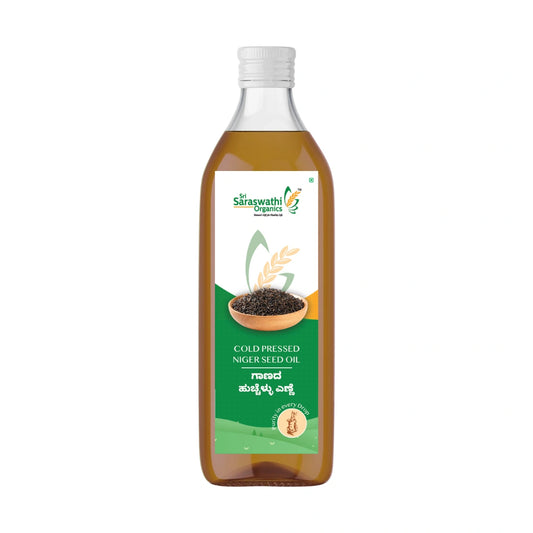
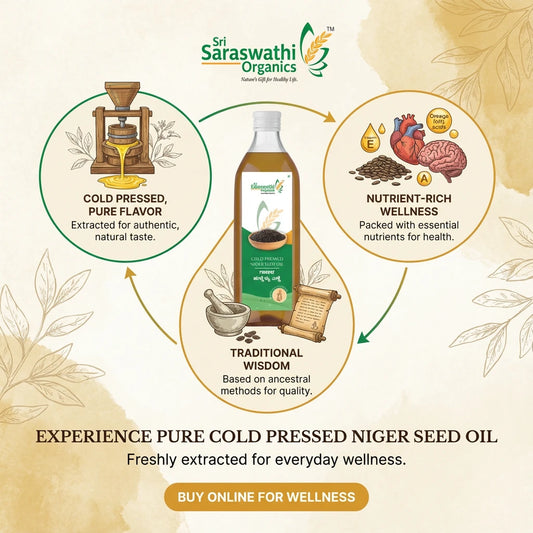
🌿 Bull Driven Niger Seed Oil
Distinctive traditional oil with unique flavour.
🌰 Bull Driven Almond Oil
Premium oil for food and personal care.
How Is Bull Driven Oil Made?
Bull Driven Oil is traditionally extracted through a slow and gentle process using a Wooden Press. The process involves the following stages:
1. Selecting & Cleaning the Seeds
Carefully selected oilseeds are cleaned to remove dust, stones and other impurities before extraction.
2. Placing the Seeds in a Wooden Ghani
The cleaned seeds are placed inside the Wooden Ghani, the traditional equipment used for wood-pressed oil extraction.
3. Bull-Powered Slow Extraction
A bull walks around the ghani, gradually rotating the wooden mechanism at a steady 2–3 RPM. The seeds are slowly crushed and pressed, and the extraction process typically takes around 3–4 hours, depending on the type and quantity of seeds.
🤔 Ever wondered happens to the leftover oil cake?
After the oil is extracted, the leftover oil cake is not wasted. It is a nutritious by-product used as cattle feed, making the traditional oil extraction process more sustainable and low-waste.
4. Natural Sun-Drying
After extraction, the oil is gently sun-dried to allow residual moisture to evaporate naturally before filtration.
5. Filtration & Settling
The oil is allowed to settle naturally and carefully filtered to remove fine seed particles before bottling.
6. Bottling & Storage
The finished oil is bottled and stored carefully, away from excessive heat, light and moisture, to help maintain its natural quality.
What Makes the Bull-Driven Process Traditional?
Bull Driven Oil extraction is more than an alternative to modern machinery. It represents a time-honoured approach to oil making, where patience, craftsmanship and traditional knowledge are an important part of the process.
From selecting and preparing the seeds to monitoring the extraction and carefully handling the finished oil, each stage follows practices that have been refined and passed down through generations.
For a closer look at what happens during this extraction process and why factors such as speed, pressure and the wooden ghani matter, read our article The Science Behind Bull-Driven Oil.
Bull-Driven Oil vs Modern Mechanical Extraction
| Feature | Bull-Driven Wood Pressed Oil | Modern Mechanical Extraction |
|---|---|---|
| Operating Speed | Ultra-Slow (2–3 RPM): No friction heat is generated during the process. | High Speed: Rapid rotation creates significant friction and heat. |
| Temperature Control | Under 40°C: Stays naturally cool, protecting sensitive vitamins and enzymes. | Can exceed 100°C: High heat can destroying nutritional value of oil. |
| Material Impact | Wooden Ghani (Baage Mara): Wood acts as a natural insulator and adds to the aroma. | Metal (Steel/Iron): Metal conducts heat and can cause the oil to oxidize faster. |
| Nutrient Content | Fully Retained: Natural antioxidants, Vitamin E, and Omega fats stay intact. | Depleted: Heat and high pressure strip away the oil's natural goodness. |
| Aroma & Flavour | Rich & Authentic: Smells and tastes exactly like the original seed. | Mild or Neutral: High-speed processing often leaves the oil bland or burnt. |
| Chemical Use | Zero Chemicals: Naturally settled and filtered without any additives. | Refining Required: Often requires bleaching and deodorizing to fix heat damage. |
| Eco-Footprint | Carbon Neutral: Zero electricity used; a completely sustainable process. | High Energy: Relies heavily on electricity and industrial infrastructure. |
The Choice for a Healthier Tomorrow
We often think that modern technology always means "better," but the wisdom of the wooden ghani tells a different story. By choosing bull-driven oil, you are choosing to keep your nutrients intact, your chemicals at zero, and your carbon footprint low.
It is a small change in your kitchen that makes a massive difference in your well-being. When you switch from industrial, high-heat oils to slow-pressed, bull-driven oils, you aren’t just changing your cooking medium—you are choosing a path of honesty and health.
Which oil will you start your journey with today? From our wellness-focused Almond oil to our daily-use Sunflower oil, experience the difference that 100% natural extraction makes.
Explore Related Products:
Frequently Asked Questions:
How is bull-driven oil different from regular cold-pressed oil?
Is Bull-Driven Oil the same as Wood Pressed Oil?
Is bull-driven oil suitable for everyday cooking?


Offers and Updates
Get updates on our products, tips for healthy living, and special offers straight to your inbox.
