



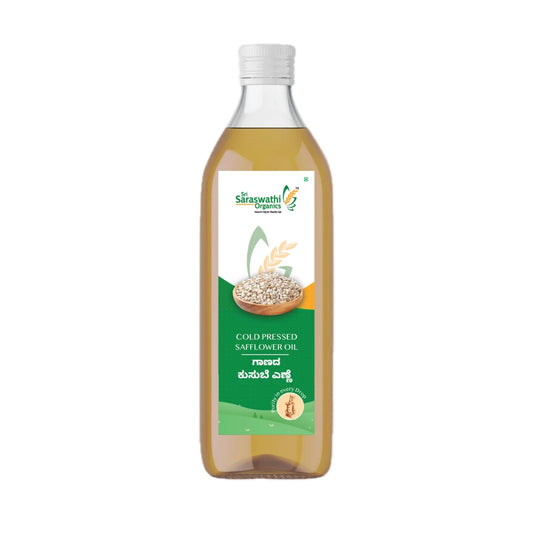
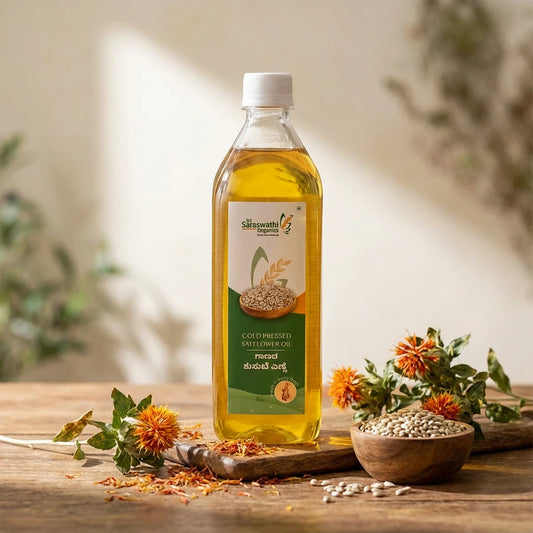
Yes. Safflower oil has a mild flavour and can be used for everyday cooking, sautéing, tempering and baking.
When choosing a cooking oil, many households look for an option that combines a mild flavour, a useful fatty-acid profile and versatility in everyday cooking. Safflower oil , traditionally known in India as Kardi oil/kusube oil, is one such oil that has been used for generations.
Safflower oil is extracted from the seeds of the safflower plant (Carthamus tinctorius). The seeds are naturally rich in unsaturated fatty acids, particularly linoleic acid (Omega-6), while some safflower varieties are also naturally higher in oleic acid (Omega-9).
In this guide, we'll explore what safflower oil is, its nutrition and benefits, how to use it in cooking, and what makes cold pressed and bull-driven extraction different.
Explore Our Safflower Oils
Choose the extraction method that fits your everyday cooking and traditions.
Cold Pressed Safflower Oil
Naturally extracted safflower oil with a light taste and delicate aroma, ideal for everyday cooking.
Explore Cold Pressed Safflower Oil →Bull-Driven Safflower Oil
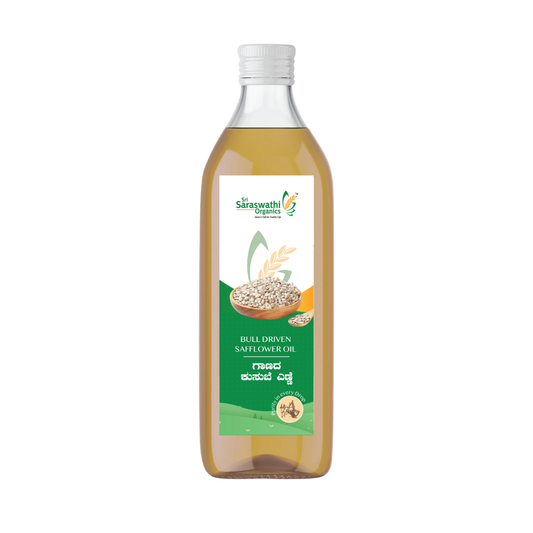
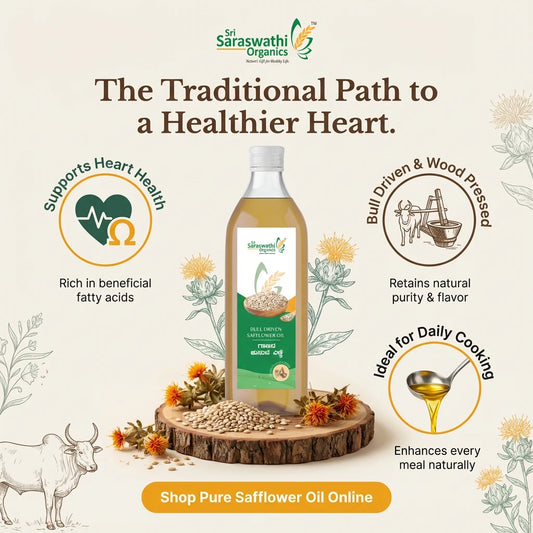
Made the traditional way, slowly pressed using a bull-driven wooden ghani for exceptional purity.
Explore Bull-Driven Safflower Oil →What Is Safflower Oil?
Safflower (Carthamus tinctorius) is an ancient oilseed crop that has been cultivated for centuries. The plant produces bright yellow-orange flowers, while its small seeds are used to produce safflower seed oil.
The seeds contain a high proportion of unsaturated fats. Depending on the variety, safflower oil can be particularly rich in linoleic acid (Omega-6) or oleic acid (Omega-9).
Safflower oil is generally light in colour with a mild, neutral flavour, making it suitable for a variety of everyday recipes without overpowering the taste of other ingredients.
🌼 Did You Know?
The "False Saffron": Safflower is sometimes called "False Saffron" because its dried petals can be used to add a beautiful golden-orange colour to foods such as rice, soups and stews.
Safflower Oil Nutrition
Safflower oil is primarily composed of fat, with most of its fatty acids being unsaturated. Its nutritional composition can vary depending on the safflower variety and extraction method. The main fatty acids found in safflower oil include:
- Linoleic acid (Omega-6)
- Oleic acid (Omega-9)
- Smaller amounts of saturated fatty acids
- Vitamin E, naturally present in safflower oil
🌱 Did You Know?
Deep Roots in the Field: Safflower develops a deep taproot system that can reach up to 10 feet into the soil, helping the plant access moisture from deeper layers and making it well suited to relatively dry growing conditions.
Why Safflower Oil is the "High-Heat Hero"
The biggest struggle with switching to cold-pressed oils is deep frying. Most unrefined oils (like Extra Virgin Olive Oil or Flaxseed Oil) have low smoke points, meaning they break down and release harmful toxins when heated for Pakoras or Puris.
Safflower Oil is different. It has a naturally high smoke point (approximately 210°C to 232°C).
This makes it the perfect "all-rounder" oil for the Indian kitchen. You get the nutritional benefits of a cold-pressed oil with the heat stability required for traditional Indian frying. You no longer have to choose between your health and your favourite crispy snacks.
The Two Paths to Purity: Cold Pressed vs. Bull-Driven Wood Pressed
As a consumer, you have two choices at Sri Saraswathi Organics. Both are vastly superior to store-bought refined oils, but they serve different needs.
1. Cold Pressed Safflower Oil
Our standard cold-pressed oil is extracted using modern mechanical presses that operate at a low RPM. We carefully monitor the temperature to ensure it never exceeds 40°C.
-
Best for: Daily cooking, sautéing, and families looking for a high-quality, budget-friendly transition from refined oils.
-
The Result: A clean, nutrient-dense oil that retains its natural vitamins and minerals.
2. Bull-Driven Wood Pressed Safflower Oil
This is the pinnacle of traditional oil extraction. We use a Baage Mara (Wooden Ghani) powered by bulls. The process is incredibly slow,srioperating at just 2–3 RPM.
-
Why it’s superior: Because there is no motor, there is zero frictional heat. The wood of the Baage Mara also absorbs any minimal heat generated, acting as a natural temperature regulator.
-
Medicinal Grade: This method preserves the highest possible levels of Vitamin E and antioxidants. It is often used not just for cooking, but for its medicinal properties in Ayurveda.
-
Best for: Those who want the absolute purest form of nutrition and are committed to a zero-compromise wellness lifestyle.
Health Benefits of Cold Pressed Safflower Oil
🥄 The Right Amount Matters
Use oils in moderation and rotate them: Around 1–2 tablespoons a day can be a useful general reference for cooking oil intake. For greater variety, rotate between different oils such as safflower, groundnut, sesame, sunflower, mustard and coconut oil.
1. The Heart Protector
Safflower oil is famous for its high concentration of unsaturated fats. Research suggests that replacing saturated fats with safflower oil can help lower LDL (bad) cholesterol. The presence of Linoleic acid helps in maintaining the elasticity of the arteries and preventing the buildup of plaque, significantly reducing the risk of heart disease.
2. Blood Sugar Management
Clinical studies have shown that regular consumption of safflower oil can improve blood sugar levels and insulin sensitivity. For those managing Type 2 Diabetes, switching to kusube oil provides a healthy source of fats that doesn't cause the metabolic stress associated with refined vegetable oils.
3. Fighting Inflammation
Chronic inflammation is the root cause of many modern ailments, including arthritis and autoimmune disorders. Safflower oil contains Vitamin E and polyphenols that act as anti-inflammatory agents.
4. Weight Loss and Metabolism
Safflower oil is rich in Omega-6 fatty acids, which help the body produce prostaglandins. These compounds help in muscle contraction and help the body burn fat rather than store it. When paired with a Millet-based diet , Safflower oil becomes a powerful tool for weight management.
5. Skin and Hair Health
Because it is non-comedogenic (meaning it doesn't clog pores), Safflower oil is an excellent carrier oil for skincare. It is rich in Linoleic acid, which combines with sebum to unclog pores and reduce blackheads. Applying it to the hair can also stimulate circulation, promoting growth and shine
How to Use Safflower Oil in Your Kitchen
-
Deep Frying: Use it for Vadas, Puris, and Pakoras. It won't go rancid at high temperatures.
-
Daily Tempering (Tadka): Its neutral taste makes it perfect for Dal and Sabzi, allowing the spices to be the hero.
-
Baking: Use it as a healthy substitute for butter or margarine in cakes and muffins.
-
Salad Dressings: Because it stays liquid even in the refrigerator, it's perfect for cold dressings.
Why Choose Sri Saraswathi Organics Safflower Oil?
At Sri Saraswathi Organics, we focus not only on the ingredient but also on how the oil is extracted.
No Chemical Solvents: Our oils are mechanically extracted and 100% pure without chemicals and solvents.
Below 40°C: Our extraction processes are carried out while maintaining the oil temperature below 40°C.
Two Extraction Choices: Choose between Cold Pressed Safflower Oil and our traditional Bull-Driven Wood Pressed Safflower Oil
Focus on Quality: We focus on careful sourcing, extraction and quality checks so that you know more about the oil you bring into your kitchen.


