



Yes. Cold pressed coconut oil can be used for everyday cooking, including sautéing, tempering and traditional recipes. Use it in appropriate quantities as part of a balanced diet.

Cold Pressed Coconut Oil: Benefits, Uses for Hair, Skin & Cooking

⏱️ 8 min read
Coconut oil has been part of Indian kitchens and traditional personal-care practices for generations. From cooking and oil pulling to hair care and body massage, coconut oil is valued for its versatility and distinctive aroma.
But not all coconut oils are made in the same way. The coconut can be processed into refined coconut oil, cold pressed coconut oil, or bull driven wood pressed coconut oil and the method used to extract and process the oil can affect its flavour, aroma, colour and naturally occurring compounds.
In this guide, we'll explore coconut oil benefits, nutrition, cooking uses, hair and skin applications, oil pulling, and the difference between cold pressed and bull-driven wood pressed coconut oil.
What Is Coconut Oil?
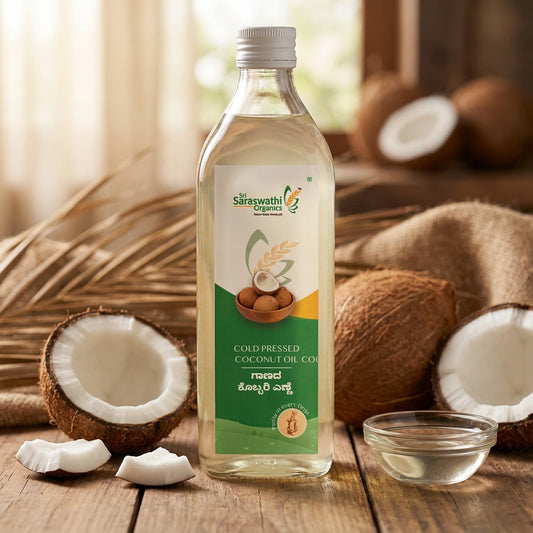
Coconut oil is the edible oil extracted from the flesh of dried/mature coconuts. Coconuts naturally contain a high proportion of oil. Once the coconut flesh is pressed, the oil can be separated and filtered for use in cooking, personal care and traditional practices.
What Makes Cold Pressed Coconut Oil Different?
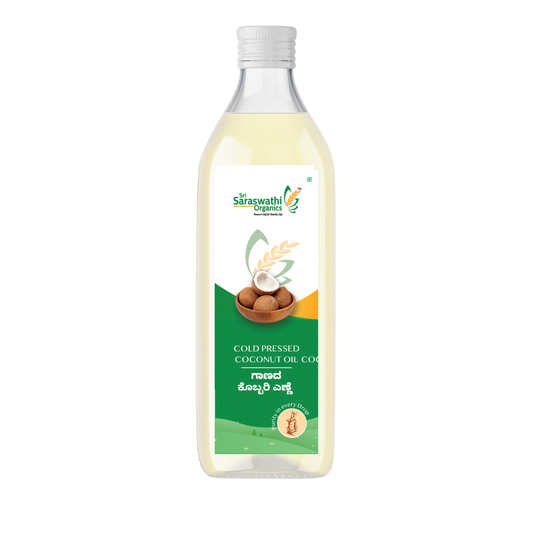
Cold pressed coconut oil is produced using mechanical extraction rather than chemical solvent extraction. The coconut is prepared and mechanically pressed to release the oil. The resulting oil can then be filtered to remove suspended particles.
Because it undergoes less intensive processing than refined coconut oil, cold pressed oil can retain more of the coconut's natural aroma, flavour and characteristic compounds..
✨ Why Does the Extraction Method Matter? +
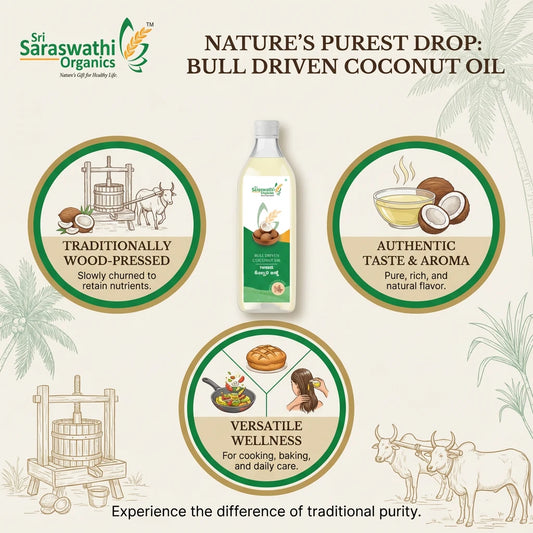
The way an oil is extracted affects its final characteristics. While industrial refining involves high heat and extensive processing that can destroy naturally occurring compounds, cold-pressed oils are mechanically extracted at low temperatures, typically below 40°C, helping minimise friction and heat while retaining more of the coconut's natural characteristics.
Coconut Oil Benefits
1. Instant Energy & Metabolism (The MCT Advantage)
Unlike most other fats, coconut oil is rich in Medium-Chain Triglycerides (MCTs). These fats don’t need to be broken down by bile; they go straight to the liver to be used as instant energy. This makes it an incredible fuel for the brain and a favorite for those on Keto or Paleo diets.
2. Immune System Support (Lauric Acid)
Nearly 50% of coconut oil is Lauric Acid. When digested, it forms monolaurin, a substance that can kill harmful pathogens like bacteria, viruses, and fungi. Outside of human breast milk, wood-pressed coconut oil is nature's richest source of this life-protecting compound.
3. High Stability for Sautéing & Baking
With a smoke point of approximately 180°C, wood-pressed coconut oil is highly resistant to oxidation. This means it doesn't turn into toxic trans fats easily when used for medium-heat cooking, tempering (tadka), or baking.
4. Gut Health and Digestion
The antimicrobial properties of unrefined coconut oil help balance the "good" and "bad" bacteria in your gut. It is also "Sheeta" (cooling) according to Ayurveda, making it excellent for soothing internal inflammation and balancing Pitta (heat) in the body.
5. Natural Antioxidants for Skin & Hair
Because it is never heated during extraction, it retains natural polyphenols. While it’s great for cooking, it’s also a "live" moisturizer that protects the skin’s barrier and prevents protein loss in hair.
💡 Tip: The "80/20" Rule
Because coconut oil is high in saturated fats, it should not be the only oil in your kitchen. For a balanced intake of fatty acids (SFA, MUFA, and PUFA), use coconut oil for about 20–30% of your cooking and rotate the remaining oils, such as groundnut, sesame, safflower, sunflower and mustard oils, according to your cooking needs and preferences. Think of coconut oil as your "specialty" fat, especially for dishes where you enjoy its distinctive tropical aroma.
Uses of Cold Pressed Coconut Oil
Coconut Oil for Cooking
Celebrated for its heat stability and creamy tropical aroma, coconut oil is the culinary backbone of coastal India – particularly in Kerala, Tamil Nadu, and Karnataka. Its unique ability to bind spices makes it indispensable for authentic favorites like Avial (creamy vegetable stew), Thoran (coconut-based stir-fry), and the world-famous Kerala Banana Chips.
Beyond main courses, it is the "secret ingredient" for a perfect tempering (tadka) in Sambar and chutneys, where just a spoonful releases a rich, nutty fragrance. Whether you are simmering a coastal fish curry or sautéing morning vegetables, this oil adds a traditional "soul" to the dish that refined oils simply cannot replicate.
Coconut Oil for Hair:
Coconut oil has been a traditional part of hair care for generations. Cold-pressed and bull-driven wood-pressed coconut oils are minimally processed and retain the coconut's natural properties, including lauric acid, a fatty acid that has an affinity for hair proteins and can help the oil interact with the hair shaft.
How to Use Pure Coconut Oil for Hair
-
Pre-Wash Conditioning: Apply a small amount to your scalp and hair lengths before bathing. This helps condition the hair and protect it from dryness during washing.
-
Scalp Massage: Gently massage coconut oil into the scalp as part of your regular hair-care routine. Its moisturising properties can help keep the scalp feeling nourished and comfortable.
-
Natural Shine: Apply a tiny amount to the ends of damp hair to help smooth the appearance of frizz and add a natural shine.
Coconut Oil for Skin: A Natural Moisturizer
Cold-pressed and bull-driven wood-pressed coconut oils retain the coconut's natural characteristics and can be used as a simple, nourishing addition to your skincare routine. Coconut oil acts as an occlusive, helping reduce moisture loss and keeping the skin feeling soft and moisturised.
Deep Hydration for Body & Face
-
For the Body: Apply a small amount to slightly damp skin after a shower to help lock in moisture. It can be especially useful for dry elbows, cracked heels and dry winter skin.
-
For the Face: Coconut oil can work well for dry skin as a rich moisturiser. Since it may feel heavy or clog pores for some people, those with oily or acne-prone skin can consider using it as a pre-wash makeup remover, followed by a gentle cleanser.
Traditional Body Massage
Coconut oil has long been used in Indian households as a traditional body massage oil. Its smooth texture makes it easy to apply and massage into the skin, while its natural coconut aroma adds to the experience.
Regular oil massage can help soften the skin and reduce the feeling of dryness, making it a simple addition to a self-care routine.
Tip
If you're trying coconut oil on your skin for the first time, apply a small amount to a limited area first to see how your skin responds.
Coconut Oil Pulling Benefits
Oil pulling is a traditional oral-care practice in which oil is swished around the mouth and then discarded. Coconut oil is commonly used for this practice. While oil pulling may help reduce some oral bacteria and support oral hygiene, it should not replace brushing, flossing or regular dental care. If you practise oil pulling, use it as a complementary habit rather than a substitute for conventional oral hygiene.
How to Choose the Best Coconut Oil
To ensure you are getting a nutrient-rich, chemical-free oil, look for these markers of quality:
- Verify the Extraction Method: Choose cold-pressed oils over extensively refined oils, or opt for bull-driven wood-pressed (Lakdi Ghani) oil for the highest level of purity and traditional extraction.
- The Aroma: It should have a mild, sweet, and fresh coconut scent. If it is completely odorless, it has been chemically refined. If it smells "burnt," it was overheated.
- Ingredient List: Check for 100% Coconut only. It should have zero preservatives, zero bleaching agents, and zero synthetic antioxidants (like TBHQ).
❄️ Why does coconut oil solidify in winter? Tap to see why →
🥥 It's completely natural and a sign of purity!
Pure, unrefined coconut oil has a melting point of about 24°C. If your oil solidifies in the cold, it confirms that it is 100% natural and has not been chemically altered to stay liquid
From Coconut to Oil — The Way Nature Intended
We believe that pure oil shouldn’t be a mystery. Its quality depends on three simple things: the excellence of the coconut, the honesty of the process, and the temperature of the extraction.
At Sri Saraswathi Organics, we honour the humble coconut by avoiding the high-heat and chemical refining of industrial oils. Instead, we offer two paths to purity:
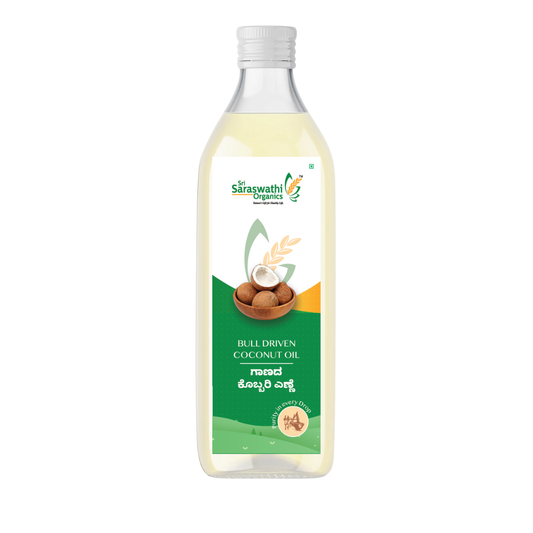
- Machine Cold-Pressed Coconut Oil: A versatile, nutrient-dense choice for your everyday cooking and wellness needs.
- Bull-Driven Wood-Pressed Coconut Oil: Our "gold standard" oil, extracted using the traditional, ultra-slow Ghani method to ensure maximum antioxidant retention.
Whether you are cooking a traditional meal or nourishing your hair, we provide the chemical-free nutrition your family deserves.
Explore Related Products:
Frequently Asked Questions:
Is cold pressed coconut oil good for cooking?
Is bull-driven coconut oil cold pressed?
What is the difference between coconut oil and virgin coconut oil?


Offers and Updates
Get updates on our products, tips for healthy living, and special offers straight to your inbox.
