

Absolutely! Sesame oil is the traditional choice for oil pulling in Ayurveda. It has natural antibacterial properties that help remove plaque, whiten teeth, and detoxify the mouth. Simply swish a tablespoon of our pure sesame oil for 10-15 minutes every morning.

Cold Pressed Sesame Oil: Benefits, Nutrition, and Uses for Hair, Skin & Cooking

⏱️ 9 min read
In the world of Ayurveda and traditional Indian wellness, one oil stands above the rest, earning the title "The Queen of Oilseeds." Known as sesame oil, gingelly oil, or til oil (til ka tel), this golden-hued oil has been a cornerstone of Indian culture for over 5,000 years. Whether you know it is as the aromatic Nalla Ennai used in Tamil households or as the healing til oil used in North Indian rituals, its importance is unparalleled.
At Sri Saraswathi Organics, we honor this ancient heritage by ensuring our oil is extracted using black sesame seeds through the traditional cold-pressing method. Unlike modern refined oils, our cold pressed sesame oil is never exposed to high heat or harsh chemicals, preserving the delicate nutrients in sesame that make it so beneficial for your body, inside and out.
In this ultimate guide, we will explore why pure sesame oil is a must-have in your pantry and beauty cabinet, covering everything from sesame oil for hair to its life-changing benefits for your skin and heart.
Pure Cold-Pressed Sesame Oil
Rich in Natural Antioxidants • Chemical-free
Pure, unrefined sesame oil with its natural aroma, flavour and goodness preserved
What Is Cold Pressed Sesame Oil?
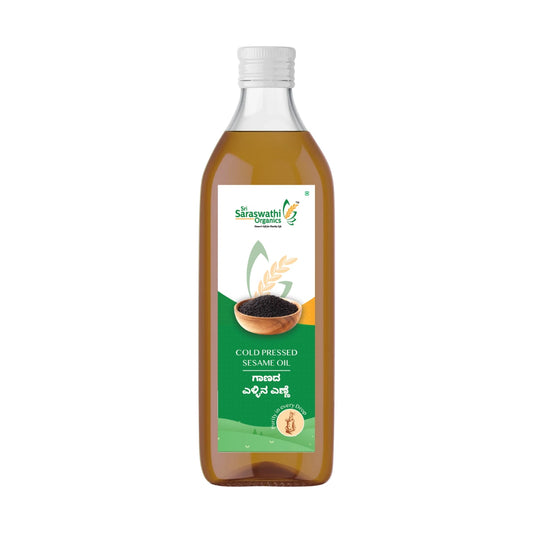
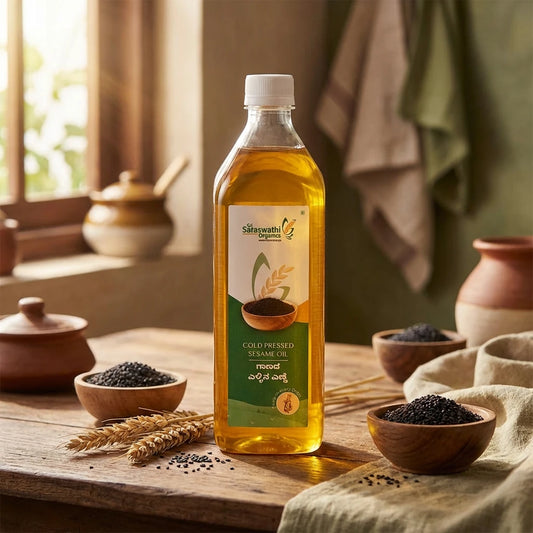
Cold pressed sesame oil is an edible oil obtained by mechanically pressing sesame seeds under controlled, low-temperature conditions (35-40°C), without chemical solvent extraction or extensive refining. At Sri Saraswathi Organics, it is made exclusively from black sesame seeds, giving the oil its naturally rich character.
It typically has a golden to deep amber appearance, a smooth, slightly thick texture and a distinctly nutty, earthy aroma and flavour characteristic of black sesame. Its relatively high smoke point, generally around 175–210°C, makes it suitable for everyday cooking, including sautéing and tempering.
Why Does the Extraction Method Matter?
The extraction method influences the oil's aroma, flavour, texture and natural character. At Sri Saraswathi Organics, both our oils are extracted without chemical solvents, but each follows a different mechanical process.
- Cold Pressed Sesame Oil: Carefully selected black sesame seeds are mechanically pressed at a gentle 18 RPM, with the temperature maintained below 40°C. The controlled, low-temperature process helps minimise heat generation during extraction while retaining the natural aroma, flavour and characteristics of the sesame seeds.
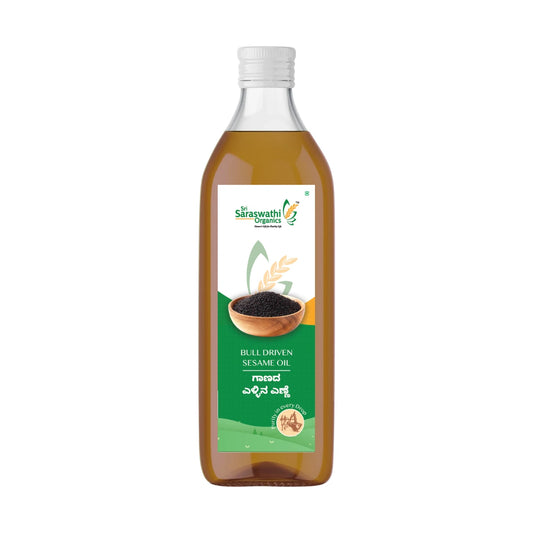
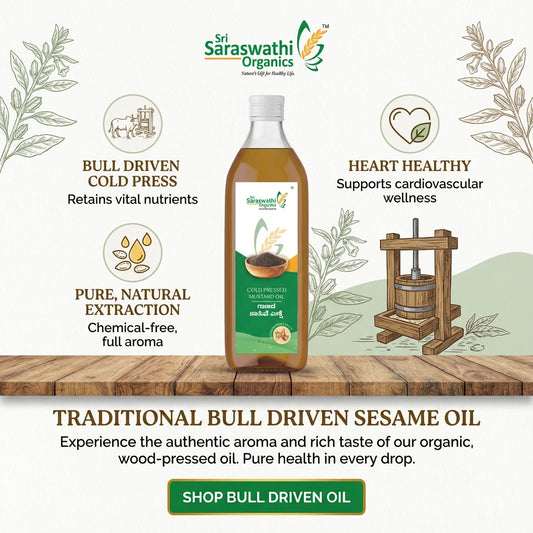
- Bull-Driven Wood Pressed Sesame Oil: Our purest and most traditional sesame oil is made from black sesame seeds using a traditional wooden ghani powered by bulls, operating at an exceptionally slow 2–3 RPM. This gentle extraction generates very little frictional heat and allows the oil to retain the rich aroma, authentic flavour and natural character of the black sesame seeds.
The Nutritional Powerhouse: Nutrients in Sesame
The nutritional profile of sesame seed oil comes primarily from its fatty acid composition and naturally occurring compounds. Sesame oil contains a combination of monounsaturated and polyunsaturated fats, along with naturally occurring antioxidants such as sesamin, sesamolin and sesamol. The exact nutritional composition can vary depending on the sesame variety and how the oil is extracted.
-
Healthy Fats: Sesame oil is rich in monounsaturated and polyunsaturated fatty acids, including oleic acid (Omega-9) and linoleic acid (Omega-6). These unsaturated fats form a major part of the oil's nutritional profile.
-
Vitamin E: Sesame oil naturally contains vitamin E compounds, including tocopherols, which have antioxidant properties and help protect the oil from oxidation.
-
Sesamin and Sesamolin: These naturally occurring sesame lignans are characteristic compounds found in sesame. They contribute to the antioxidant properties and oxidative stability of sesame oil.
-
Sesamol: Sesamol is another naturally occurring compound associated with sesame and is known for its antioxidant properties.
-
Naturally Stable Oil: The combination of its fatty acid composition and naturally occurring lignans gives sesame oil relatively good oxidative stability, which is one reason it has traditionally been valued as a cooking oil.
-
Tyrosine: This vital amino acid found in sesame is closely connected to serotonin activity in the brain, supporting emotional well-being by enhancing your mood and easing feelings of stress.
Sesame Oil for Cooking: Enhancing Flavours Naturally
For generations, sesame oil for cooking has been an important part of South Indian cuisine, particularly in dishes where its distinctive nutty aroma and rich flavour are meant to be part of the recipe. Also known as gingelly oil or til oil, it works beautifully in everyday cooking, from tempering spices and sautéing vegetables to preparing traditional pickles, podis and rice dishes.
Why Use Sesame Oil in Your Kitchen?
- The Perfect Tadka: A drizzle of pure sesame oil brings out the aroma of mustard seeds, curry leaves, chillies and other spices, making it particularly well suited for dals, sambars, rasam and vegetable preparations.
- Traditional Pickles: Gingelly oil is widely used in traditional Indian pickle-making. Its rich flavour complements the spices while the oil layer helps protect the pickle from exposure to air when prepared and stored properly.
- The Classic Podi Combination: Few combinations are as familiar in South Indian cuisine as hot idlis or dosas served with podi and sesame oil. A drizzle of gingelly oil helps bind the spice powder while adding its characteristic nutty flavour.
- Everyday Cooking: Cold pressed sesame oil can be used for sautéing, tempering and other everyday cooking applications where you want the natural flavour of sesame to come through. Its relatively high smoke point also makes it versatile for a range of cooking methods.
- Beyond Traditional Recipes: While sesame oil is strongly associated with Indian cuisine, its nutty flavour also works well in simple dressings and marinades. Try combining cold pressed sesame oil with lemon, ginger and a little seasoning for a flavourful dressing.
Sesame Oil for Hair: A Traditional Hair-Care Favourite
Sesame oil for hair has been part of traditional Indian hair-care routines for generations. It is commonly used for scalp massage and pre-wash hair oiling. Its naturally rich texture and characteristic aroma make it a popular choice for those who prefer simple, traditional hair-care practices.
1. Supports Follicle Health and Growth
Sesame seed oil is known for its high "occlusive" and penetration ability, allowing it to reach deeper layers of the scalp. By improving blood circulation to the follicles, it provides a nutrient-rich environment that supports natural hair growth.
2. Supports Natural Pigmentation
One of the most valued benefits of black sesame for hair is its ability to help maintain the hair's natural dark pigment. The oil is rich in antioxidants that help combat oxidative stress, one of the leading factors in premature greying. Regular scalp massages help keep your tresses looking vibrant and youthful for longer.
3. Helps Condition Dry Hair
Regular hair washing, heat styling and exposure to sun and pollution can leave hair feeling dry and rough. Applying a small amount of pure sesame oil before washing can help coat the hair strands and reduce the feeling of dryness, leaving the hair feeling softer and more conditioned after washing.
4. A Traditional Choice for Scalp Care
Sesame oil's natural properties help soothe an itchy scalp and manage dryness-related flakiness. Its inherent antibacterial and antifungal characteristics help maintain a healthy pH balance.
Sesame Oil for Skin: A Traditional Moisturising Oil
The advantages of sesame oil for skin have been recognized by Ayurveda for millennia. It is often used as the base oil for many Ayurvedic herbal oils because of its ability to carry nutrients deep into the skin tissues.
1. The Tradition of Abhyanga
Til ka tel has traditionally been used for Abhyanga, an oil-massage practice associated with Ayurveda. Gently massaging sesame oil onto the body can be a relaxing self-care ritual, while the oil helps moisturise and soften the skin. Its richer texture can be especially comfortable when the skin feels dry during colder or drier seasons.
2. Sesame Oil for Face Care
Sesame oil for face care is another traditional use, particularly among people who prefer simple, plant-based oils. Sesame oil contains naturally occurring vitamin E and fatty acids that contribute to its moisturising properties. However, facial skin varies considerably from person to person, so it is advisable to patch-test the oil first, especially if you have sensitive or acne-prone skin.
3. Sesame Oil as a Cleansing Oil
Because oil can dissolve other oil-based substances, sesame oil can be used as part of an oil-cleansing routine to help loosen makeup, sunscreen and excess sebum from the skin. A small amount can be gently massaged onto the face and then removed with a suitable cleanser or soft, damp cloth. This can be a useful option for people who enjoy incorporating natural oils into their skin-care routine.
4. Soothing Dry and Irritated Skin
For those prone to skin sensitivities or redness, the advantage of sesame oil lies in its calming nature. While it is not a cure for medical conditions, its high concentration of linoleic acid helps reinforce the skin’s natural barrier. This provides a protective shield that soothes dryness-induced irritation and helps the skin retain its moisture throughout the day.
A Timeless Staple for a Conscious Lifestyle
The enduring legacy of sesame oil across generations isn’t just due to its distinct, nutty aroma; it is rooted in the profound wellness benefits it offers from head to toe. From acting as a nourishing shield for your skin to serving as a heart-healthy choice in your kitchen, the advantages of sesame oil are as relevant today as they were centuries ago.
By choosing unrefined sesame oil, you are making a conscious decision to move away from chemically processed fats and toward a whole-food source of nutrition. At Sri Saraswathi Organics, we offer two paths to purity:
- Our Cold Pressed Sesame Oil: Extracted with precision to ensure the nutrients remain intact, making it a superior choice for daily culinary and beauty needs.
- Our Bull Driven Wood Pressed Sesame Oil: The pinnacle of tradition. Extracted in a Baage Mara (Wooden Ghani) at a slow 2–3 RPM, this oil never exceeds 40°C. This "zero-friction" method is the ultimate way to preserve the oil's natural molecular structure and aroma.
Whether you are seeking sesame oil for hair care, for your traditional recipes or for a daily skincare ritual, our commitment to chemical-free extraction ensures you receive the highest quality in every drop.
Embrace the wholesome goodness of oils that honor the earth and your body. Experience the difference that traditional, slow-pressed extraction makes for your family’s well-being.
Switch to Purity. Shop Sri Saraswathi Organics Oils Today!
Explore Our Traditional Oils
Choose the extraction method that fits your everyday cooking and traditions.
🌿
Cold Pressed Oils
Naturally extracted oils for everyday cooking, with their natural flavour and aroma preserved.
Explore Cold Pressed Oils →🐂
Bull-Driven Oils
Traditionally extracted at a slow pace using a bull-driven wooden press for an authentic oil-making experience.
Explore Bull-Driven Oils →Explore Related Products:
Frequently Asked Questions:
Can I use sesame oil for oil pulling?
Can I use cold pressed sesame oil for deep frying?
Why is sesame oil used in traditional Indian pickles?
Recent Posts
Offers and Updates
Get updates on our products, tips for healthy living, and special offers straight to your inbox.
